 Genius Asian
 8-Energy 5 Steps 13 Postures, Part 1, 八門五步 十三勢
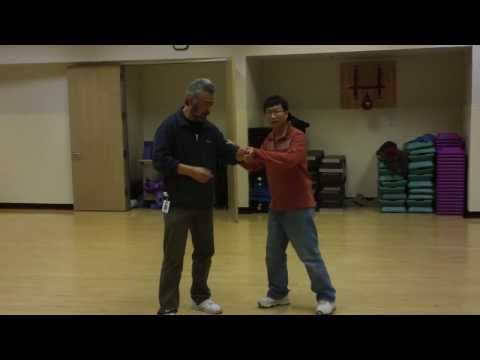
8 Energies, 5 Steps, 13 Postures Part 1: Master Byron Zhang’s Interpretation
Key Takeaways
- The 8 energies, 5 steps, and 13 postures form the complete framework of Tai Chi technique
- Master Byron Zhang presents his interpretation, which may differ from other Tai Chi styles
- The 8 energies include the four primary (Peng, Lu, Ji, An) plus four secondary energies
- The 5 steps refer to directional movements that complete the tactical toolkit
- Understanding this framework gives context to every technique in the Tai Chi repertoire
What This Video Shows
The concept of 8 energies, 5 steps, and 13 postures (Ba Men Wu Bu Shi San Shi) is one of the most important theoretical frameworks in all of Tai Chi. It is essentially the periodic table of Tai Chi technique — every movement in every form can be understood as a combination of these elements.
Master Byron Zhang shares his interpretation of this framework in this first of a three-part series. He notes that other styles may interpret these concepts differently, and encourages viewers to appreciate this particular version while remaining open to alternative perspectives.
The 8 Energies (Ba Men)
The eight energies are divided into four primary and four secondary:
Primary Energies (Si Zheng):
- Peng (Ward Off) — an expanding, rising energy
- Lu (Roll Back) — a yielding, redirecting energy
- Ji (Press) — a forward-directed combining energy
- An (Push) — a downward-and-forward rooting energy
Secondary Energies (Si Yu): 5. Cai (Pluck) — a sharp, downward pulling energy 6. Lie (Split) — an expanding energy that separates in two directions 7. Zhou (Elbow) — close-range striking energy using the elbow 8. Kao (Shoulder) — body-contact energy using the shoulder or torso
Together these eight energies cover every possible type of force application in push hands and martial application.
The 5 Steps (Wu Bu)
The five steps describe directional movement:
- Jin Bu — advance (step forward)
- Tui Bu — retreat (step backward)
- Zuo Gu — look left (attend to the left)
- You Pan — gaze right (attend to the right)
- Zhong Ding — central equilibrium (maintain center)
The combination of 8 energies and 5 steps yields 13 postures, which represent the complete technical vocabulary of Tai Chi.
Why This Framework Matters
Understanding the 8-5-13 framework transforms your practice from memorizing sequences to understanding principles. When you know the underlying energy of each movement, you can apply the right response spontaneously rather than searching through memorized techniques.
Building a Sustainable Practice
The journey of Tai Chi development is measured in months and years, not days and weeks. Here are principles that will serve you well regardless of where you are in your practice:
Consistency Over Intensity: Ten minutes of daily practice produces better results than a three-hour session once a week. Your nervous system needs regular input to build the pathways that make push hands and form work effective. Treat your practice like brushing your teeth — something you simply do every day, not something you negotiate with yourself about.
Quality Over Quantity: Slow, mindful repetitions with full attention are worth more than hundreds of distracted repetitions. When you practice, be present. Feel each weight shift, notice each point of tension, and consciously release what does not serve the movement.
Patience With Plateaus: Everyone hits periods where improvement seems to stall. These plateaus are not signs of failure — they are periods of integration where your nervous system is consolidating what it has learned. Continue practicing through plateaus and breakthroughs will come.
Community and Sharing: Tai Chi was traditionally learned in community, and that model remains the most effective. Practice with different partners, discuss your experiences, and share what you discover. The more perspectives you encounter, the richer your understanding becomes.
For the continuation, see Part 2 and Part 3. For practical application of the primary four energies, see the push hands basic training series. For the complete combined version of this series, check out 8 Energies 5 Steps 13 Postures All.